Be yourself; Everyone else is already taken.
— Oscar Wilde.
This is the first post on my new blog. I’m just getting this new blog going, so stay tuned for more. Subscribe below to get notified when I post new updates.
Be yourself; Everyone else is already taken.
— Oscar Wilde.
This is the first post on my new blog. I’m just getting this new blog going, so stay tuned for more. Subscribe below to get notified when I post new updates.
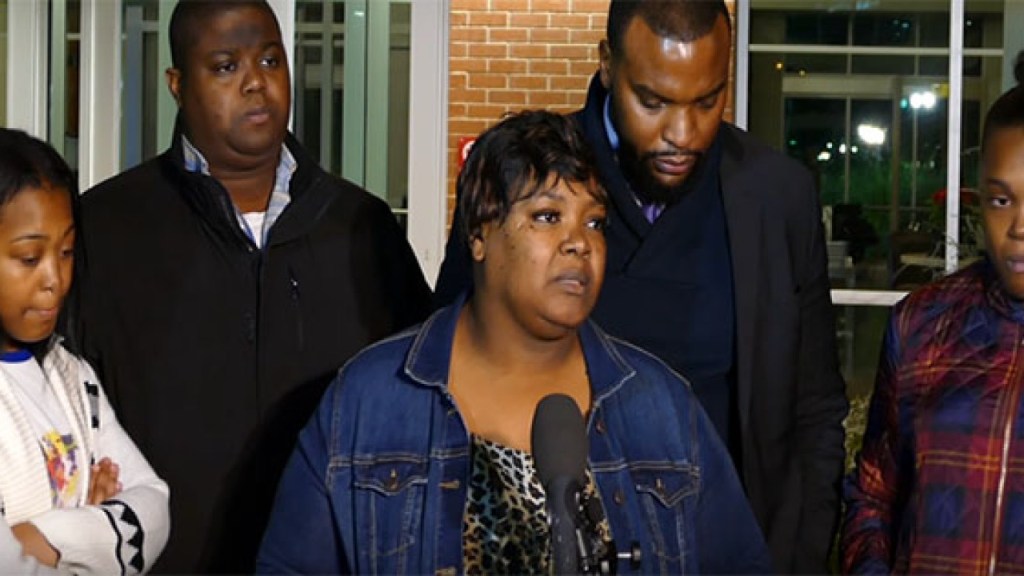
The case of Jacqueline Craig is much different than the previous two. It takes place in a neighborhood of Fort Worth, Texas. The Craig kids were outside roaming the neighborhood when the two boys were playing around and one threw a package of lemon raisins towards the other, some raisins falling onto the sidewalk in the process. The owner of the area, Vardi wasn’t very pleased at the sight of raisins on his property. He demanded that the boy pick up his trash but Craig’s son just looked at him. That’s when Vardi used force to grab the boy’s neck and again order he retrieve the items. The boy’s sister saw the commotion and ran home to inform their mother about the current situation her brother was in. This is when Jacqueline and the police come into scene. She thought he would sort out the situation and penalize Vardi for his actions but things took a turn. As she was explaining the events to the cop and defending her son, the officer William Martin questions her with “Why don’t you teach your son not to litter?” As seen in the video, this is when things get out of hand. Jacqueline gets offensive and reiterates that Vardi had no right to put his hands on her son. Martin replies with “Why not?” The tone and questions of the officer have a heavy mocking attitude. He doesn’t seem invested in Jacqueline’s time or presence. Vardi was on the side, he could have easily questioned both parties to determine a solution. Instead, Martin kept antagonizing Jacqueline until things erupted.
According to Deanna Boyd who wrote an article on Fort Worth Star-Telegram, “Vardi said he regretted all that happened in the aftermath of his call to police and added, “I also didn’t want them to get arrested.”” After being confronted by city attorney Holly Dozier about his impulsive behavior, Vardi’s defense attorney replies with “Let’s find something to put on Mr. Vardi because we’ve got to please the public.” If Vardi was truly not guilty in his aggressive act toward Jacqueline’s son, the defense attorney would have comeback with attestation.
NCB 5 got to interview Craig personally and learn about her feelings after the whole ordeal. “Letting them know that it’s not every cop out there is bad,” she tells the interviewer in regards to her kids. She still keeps a positive, open mind and preaches about it to them. While her words are expressing pity and sympathy she also feels that actions should be met with their consequences. She believes faith and trust can be restored “by holding officers accountable.” In this interview, she communicates with many contradictory statements. She acknowledges the wrongdoings but is fairly accepting of the outcome. “She still wants Officer Martin fired and charged with assault, but she now sees an even greater goal down the road.” Craig may be passive in her words however she actively finds herself marching the streets in protest and supports those in similar cases to her own.
Craig’s arrest is an example of the lack of respect some people with authority have for minorities. I chose this case because despite it going viral and getting attention, the attitude towards Jacqueline Craig is something that caught my attention. The officer could have gave a short penalty to Vardi and that be the end of it, but he chose to provoke a mother who was simply defending her child whom was in potential danger.

Miriam Carey was an average mother 34 year old mother who grew up in Brooklyn, New York. She was a dental hygienist raising her daughter, Erica. Her family labeled her as a very ambitious individual. She had aspirations to become a dentist or to write a book in the dental field. She obtained an associate’s degree from Hostos Community College in 2002. Then earned a bachelor’s degree from Brooklyn College that allowed her to pursue a license for dental hygiene. She started a placement agency for dental office personnel while working as a hygienist. “She was full of life, passionate about everything she did,” Jeannie Marra, a coworker of Miriam tells The Washington Post.
On October 3, 2013 Miriam would take the last drive of her life. According to NBC4 Washington, “She allegedly told officers who responded to her Stamford apartment prior to the Capitol Hill incident that President Barack Obama communicated with her and had set up cameras to record her life for national news outlets.” On an important note, Miriam was diagnosed with postpartum depression and psychosis. She reached the White House checkpoint and made a turn around, hitting a cop that was trying to block her path, then drove away. As she was attempting to drive away from the scene, she was stopped at the Garfield Circle. This did not stop her though; she backed the car into reverse and drove away. This is when officers opened fire at the car with the woman and her child in the backseat. The car soon crashed into some security barriers and stopped. Miriam was shot several times, but Erica was miraculously unharmed.
This case is similar to Deborah Danner because they both involve an argument about mental illness and whether or not the police handled the situation correctly. Death could have been avoided in both cases but many lawyers defending the officers mention how the police react on the public’s safety first. In this particular case the chairwoman of the Department of Law, Police Science, and Criminal Justice Administrations, Maki Haberfeld argues that officers were right to shoot due to the fact that Miriam could have been a potential terrorist attack. “We live in times of heightened alert as far as terrorist activities are concerned. It’s a matter of a split second decision that the police officer needs to take before someone explodes himself. It’s all about the larger context. They just push the button, or it could be activated from a remote location.” She said in defense of the police. When she says things like “heightened alert” and “larger context” she makes a controversial statement by implying that one life is better to sacrifice than numerous lives when really all people can be spared. A matter of split seconds can be acted upon by thinking rationally before acting by impulse.
As I reflect back on the cases of Miriam Carey and Deborah Danner I feel as though they are trying to speak past gender or race and educate on something that affects everyone. Even with how advanced we have become as a society, mental health awareness and how to handle it still needs improvement. According to Sorsha Roberts who wrote an article for mental health concerns, she says “35-50% of people with severe mental health disorders in the Global North receive no treatment.” This information was stated in 2018. A generation where we have small portable computers in the palm of our hands but yet people struggle with mental health with no treatment. These kinds of police brutality situations are good indicators as to why mental health treatment and awareness needs to expand. I hope she gets justice and rest in peace.

Deborah Danner was an intelligent woman that lived in New York City. She wrote an essay in 2012 about the challenges of living with mental illness that later got published to the New York Times website in Oct 2016. What makes her essay intriguing is that she practically predicted her own death in the essay. She referenced the death of Eleanor Bumpurs, a mentally ill woman who was killed by police in her apartment. Soon, she would suffer the same fate.
Deborah suffered from a mental disorder called schizophrenia, but she did not let that affect her life. She attended many extracurricular classes like art and acting. According to a pastor of the Trinity Church in Lower Manhattan, Reverend Matthew Heyd said “She loved being part of our community, but she was struggling with her illness and how to handle the baggage that came with her illness. She often felt alienate and alone.” Many people who interacted with her saw Deborah as a well-educated middle class woman, but neighbors mentioned that her behavior went downhill after her mother’s death in 2006. She has been admitted in and out of psychiatric hospitals. Her neighbors had to call the police on her for multiple occasions due to noise disturbances.
An unfortunate call on the evening of October 18, 2016 would be the last report on Deborah. Sergeant Hugh Barry responded to the report and confronted Deborah in her apartment. He was met with a stressed female that wielded a pair of scissors in her hand. The officer was able to persuade Deborah to drop the scissors, but she picked up a wooden bat and lunged at him. Barry then shot her twice in the torso. They weren’t instant fatal shots, but she did pass away approximately an hour after the mishaps. Barry claimed he shot Deborah in self-defense but her family objects this statement due to the distance between Barry and Deborah.
There is a stigma around mental disorders, especially those who suffer with it. There is fear between both the mentally ill and sane individuals. “Police were not trained sufficiently in how to engage the mentally ill in crisis,” stated by Deborah. Jennifer, Deborah’s sister, makes some strong claims as to why Barry mishandled the situation and should receive punishment. First, she mentions how there were four other cops and no one drew their gun but Barry. Additionally, police have been alerted to Deborah’s residence many occasions and been able to calm Deborah without the use of excessive force. According to The New York Times, training for dealing with mental illness had only accessed 4,400 of the NYPD’s roughly 36,000 officers.
Sergeant Barry was charged with several counts including second-degree murder and was acquitted on all of them. Deborah’s family received a $2 million settlement from New York City. This particular case does seem to get the justice needed and receive attention from the well-known Black Lives Matter community but it all could’ve been avoided had Barry had proper training and followed through with it. May Deborah Danner rest in peace and be a voice for those who suffer mental illness while combating the legal enforcement.
This is an example post, originally published as part of Blogging University. Enroll in one of our ten programs, and start your blog right.
You’re going to publish a post today. Don’t worry about how your blog looks. Don’t worry if you haven’t given it a name yet, or you’re feeling overwhelmed. Just click the “New Post” button, and tell us why you’re here.
Why do this?
The post can be short or long, a personal intro to your life or a bloggy mission statement, a manifesto for the future or a simple outline of your the types of things you hope to publish.
To help you get started, here are a few questions:
You’re not locked into any of this; one of the wonderful things about blogs is how they constantly evolve as we learn, grow, and interact with one another — but it’s good to know where and why you started, and articulating your goals may just give you a few other post ideas.
Can’t think how to get started? Just write the first thing that pops into your head. Anne Lamott, author of a book on writing we love, says that you need to give yourself permission to write a “crappy first draft”. Anne makes a great point — just start writing, and worry about editing it later.
When you’re ready to publish, give your post three to five tags that describe your blog’s focus — writing, photography, fiction, parenting, food, cars, movies, sports, whatever. These tags will help others who care about your topics find you in the Reader. Make sure one of the tags is “zerotohero,” so other new bloggers can find you, too.

 .
.